
Welcome to the Executive Function Group: Session #1 Recap
In today's productivity-obsessed world, finding time to focus on personal growth can feel overwhelming. That's why we've created an executive functioning skill-building group series designed for anyone seeking to enhance their daily lives. Whether you're managing burnout, juggling chronic conditions, or navigating life’s challenges, our supportive group is here to help. Participants engage at their own comfort level—choosing to have cameras on or off, communicating via chat or microphone, and participating as much or as little as feels right. Our core principle: "No shame and no pressure." We emphasize a neurodiversity-affirming and compassionate approach, welcoming individuals from all backgrounds. We will soon be offering on demand videos for those who benefit from greater flexibility to watch at your own pace. Learn more and join us here: Groups — TrueCraft Therapy & Coaching.
Session Overview
Our introductory session set the stage for our 9-week journey, where we aim to transform our understanding of executive functions and incorporate more ease and intention into our lives. The session began with groundwork into the world of executive functioning, laying the foundation for a community built on empathy and support.
Key Concepts Introduced
1. Holistic Skill Building:
Executive functions are more than tools for increased productivity. They are essential for a balanced life, helping us prioritize wellness, prevent burnout, and support chronic health challenges. This broader perspective invites participants to explore how their personal experiences align with these skills.
3. Understanding Executive Functions:
The session provided a comprehensive introduction to executive functions, such as planning, time management, and task initiation. The executive functions that will be explored in depth in this series are: Task initiation (beginning tasks), working memory, organization, planning, and time management. There will also be sessions specifically focused on burnout and capacity support and habit maintenance, and a holistic approach will be used throughout.
Educational Insights and Actionable Strategies
Here are some simple & impactful strategies to explore today:
1. Capacity Awareness:
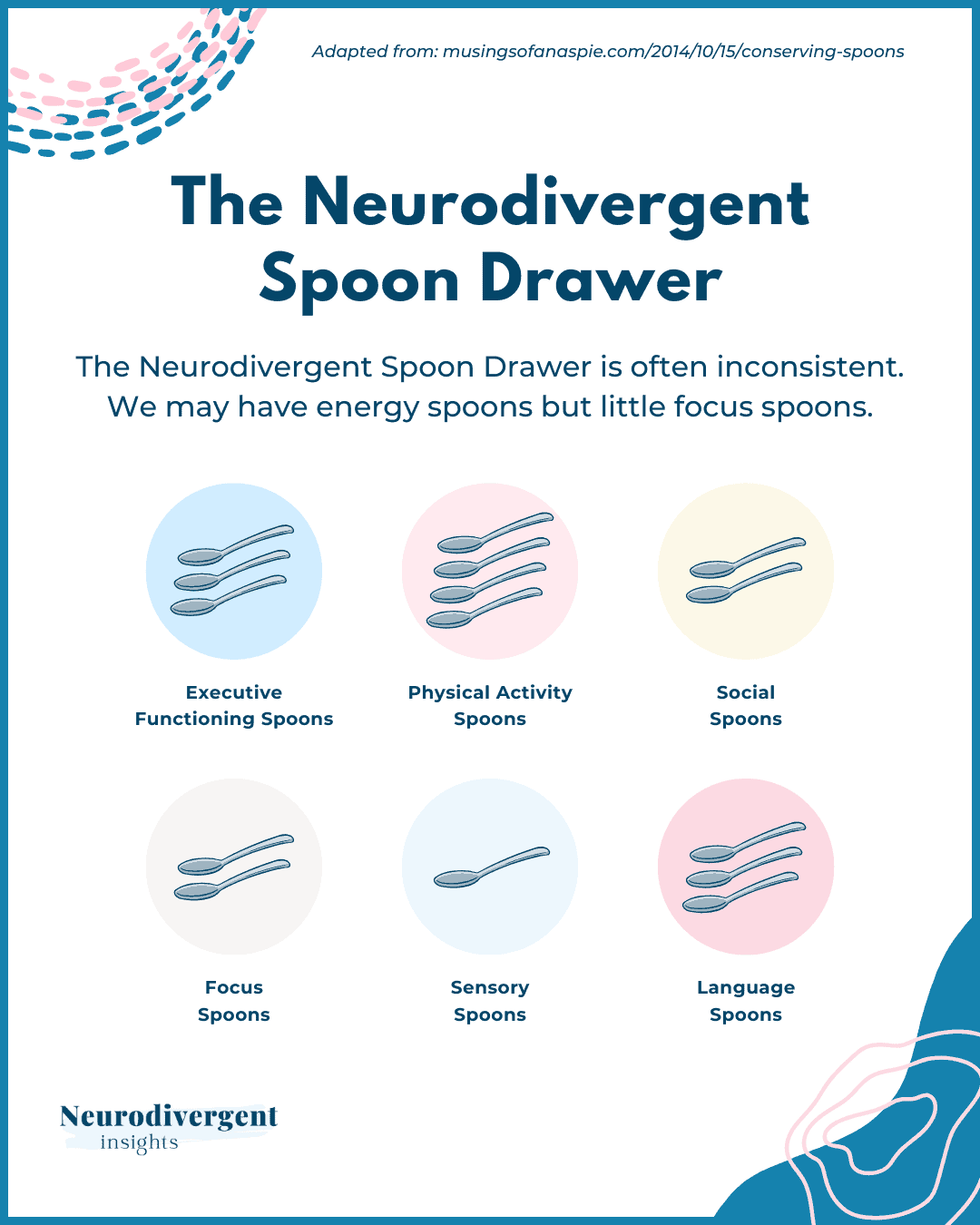
Energy Conservation is a formal term that involves bringing more awareness and intention to how we use our energy. Recognizing one's capacity and the variability throughout the day can foster better decision-making. Many of us try to cram our todo list into our day, often when we have too few hours and too little energy to work with. When planning your day, try starting with capacity first and then asking what demands can actually fit. Consider conducting a personal capacity check-in as part of your planning or reflection practices. Choose prompts that are meaningful to you and learn more about energy conservation for neurodivergent folks here.
*Image from: Spoon Theory for Autism and ADHD | Neurodivergent Insights
Some examples of reflection prompts:
What are my current cognitive, physical, sensory, social, spiritual and/or emotional energy levels?
How do my capacities change throughout the day and night? Are there predictable high and low capacity windows?
What are my high and low energy tasks? What tasks are energy givers? Do any activities take energy from one capacity and give to another? (e.g. socializing)
How often do my demands exceed my capacity?
Many of us will not always be able to fit our demands into our capacity, but the exercise can still offer us important insights and self-compassion. It can fuel our self-advocacy and allow us to give more grace and support to others. This practice can help us become more aware of where we are nourished, where we are overextended, and why. In our opinion, the why always involves structural and systemic factors and patterns in how we navigate them. Our intro group explores the cultural and social models of disability to ground our work in this important context.
2. Start with Task Initiation:
Getting started on tasks can often be a hurdle. One practical tip is to break tasks into the smallest possible action step. For example, instead of aiming to "clean the house," start with "clear a small section of the counter” or “put cleaning spray and cloth on the counter.” This strategy is helpful because:
A reduction in task size can make starting more manageable and less daunting. It can get you through the “initiation barrier.”
We are more likely to experience motivation once we begin a task, not before we begin. If you wait for motivation to start, you may never start! And once you start it’s easier to keep going.
Even if you don’t keep going, you still accomplished your intended task, no matter how tiny. The feeling of self-efficacy supports sustainable habit building. We are more likely to repeat an activity when we feel a sense of accomplishment with it, and we’re more likely to accomplish tasks that are less demanding. Contrary to the beliefs many of us were raised with, going easy on ourselves can often lead to greater success.
Read next week’s blog post for more on task initiation!
Join Us on This Journey
The executive functioning group is not just a skill-building endeavor—it's a community of shared experiences and support. We promise a space of compassion and growth. Whether your goals involve better time management and organization or creating sustainable routines, this series has strategies tailored to fit your unique strengths and challenges. Let’s support ourselves together.
Join us live or stay tuned for our on demand videos to watch at your own pace—either way, we're here to support you. We look forward to our next session on task initiation, where we'll continue building upon these essential skills. See you next week!
Megan Black, OTR/L