

Initiating Tasks with Intention: Session #2 Recap

Welcome to our recap of the second session in our executive functioning skill-building group, designed for anyone looking to enhance their ability to manage daily tasks in a sustainable and fulfilling manner. Our sessions create a supportive environment where you can engage on your terms, whether through video, chat, or simply listening. This neurodiversity-affirming space values each participant's need for flexibility, acknowledging the impact of chronic conditions or burnout. We will soon be offering on demand videos for those who benefit from greater flexibility to watch at their own pace. Let's dive into the highlights of "Initiation," where we explore the challenges and strategies around beginning tasks effectively.
Understanding the Challenge
In this session, we focused on task initiation, a common hurdle in executive functioning. Often misconstrued as procrastination or defiance, difficulty in starting tasks can stem from various underlying factors like executive functioning skills, emotional responses, and sensory overload. Recognizing these barriers helps in addressing them effectively.
Common Barriers:
Avoidance Patterns: Often linked to tasks perceived as overwhelming or anxiety-inducing, avoidance arises from past negative experiences or fear of failure.
Lack of Clarity: Ambiguous or complex tasks can lead to decision paralysis and impede starting.
Task Switching Difficulty: Moving from one activity to another can be challenging, especially when tasks have different sensory or cognitive demands.
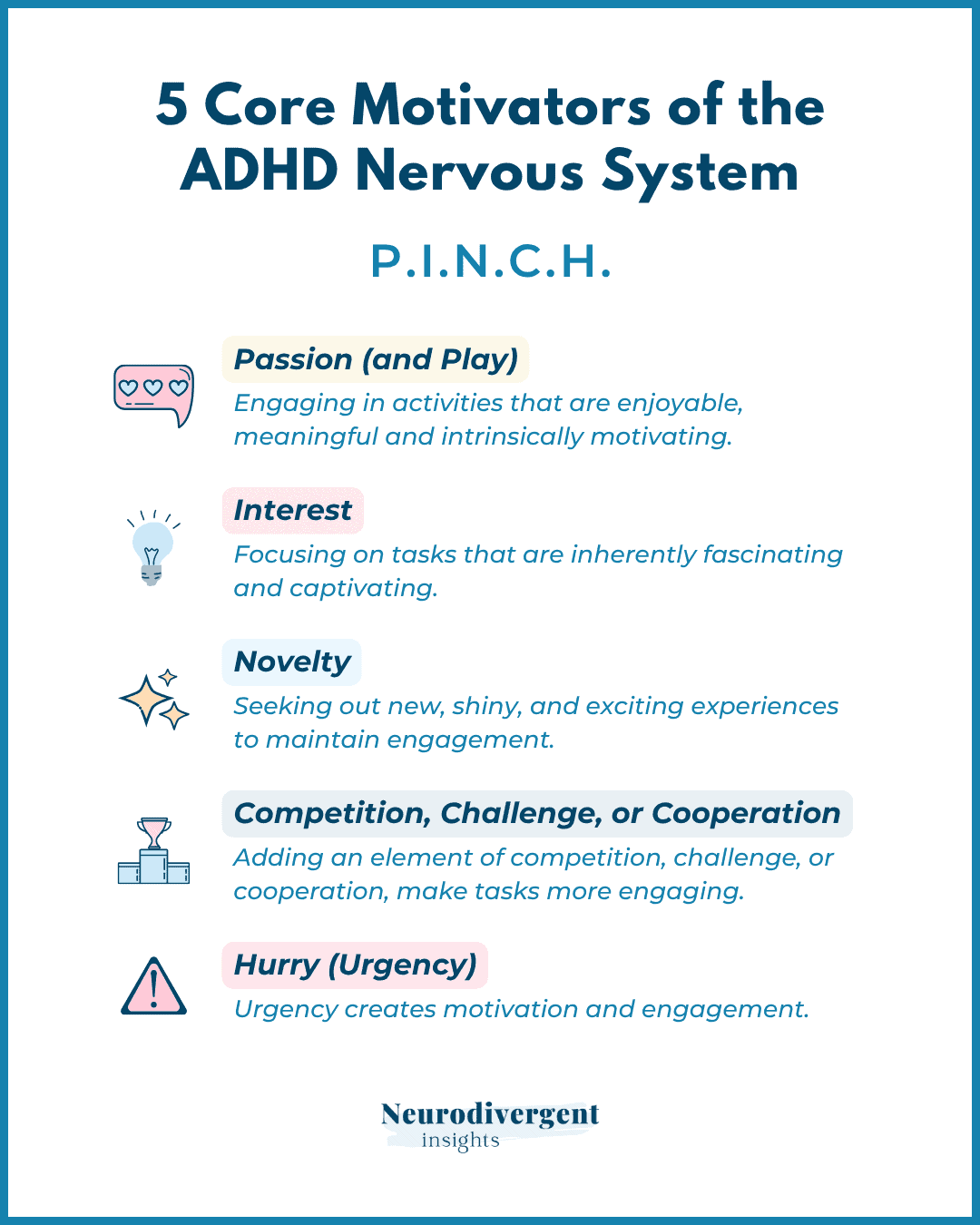
The Interest-Based Nervous System
Derived from Dr. Megan Neff's work, the concept of an "interest-based nervous system" contrasts traditional motivation theories. Instead of relying solely on importance and consequences, people are often more driven by:
Passion and Interest
Novelty
Community and Challenge
Urgency
Understanding what intrinsically motivates you can help tailor supportive strategies, making daunting tasks more approachable and engaging.
Actionable Strategies for Initiation
Here are some practical approaches to help with task initiation:
1. Dopamine Stacking:
Pair less enjoyable tasks with rewarding activities, such as listening to music or podcasts while cleaning.
Create a "dopamine menu" to explore and incorporate motivating activities throughout your day.
2. Environmental & Sensory Support:
Ensure your physical space aligns with the task demands and your sensory preferences. Adjust lighting, visual clutter, noise levels, or even the layout of your space to support the demands of the task.
Simple example: Put everything you need to start working out in an exercise station, including workout equipment, shoes, and clothes. Save a workout video playlist on youtube and/or a workout music playlist on your preferred app. When the time comes to work out, you will have fewer steps to take and decisions to make, reducing cognitive load and perceived effort to begin.
Creative example: Someone once shared with me that they hate using technology and struggle to check their email. They also love reading period dramas, so they started making email checking their “time travel time” when they light candles and dress in period clothes to complete computer tasks.
3. Community Engagement:
Engage in body doubling or executive functioning sharing, where support from others can bolster your efforts and provide accountability.
Moving Forward with Ease
By tuning into your intrinsic motivators and employing these supportive strategies, you can cultivate a more intentional and fulfilling approach to your tasks.
As we progress in this series, we're dedicated to helping you identify strategies that harmonize with your unique strengths and challenges. Embodying a no-pressure, supportive approach transforms task initiation into an engaging and manageable practice. Join us as we continue to explore and expand our toolkit with new insights and methods to navigate daily life more smoothly.
Join us live or stay tuned for our on demand videos to watch at your own pace—either way, we're here to support you. We look forward to our next session on working memory, where we'll continue building upon these essential skills. See you next week!
Megan Black, OTR/L